Ali Farisat

Network and infrastructure engineer; the person building the tools that automate that same infrastructure.

I have worked on enterprise networks since 2020: switch and router deployment, MikroTik, Windows Server and rack cabling. For the past few years I have been doing the same work in code: from Python scripts to a console that generates Cisco IOS configuration and applies it to live hardware.

Portrait of Ali Farisat

Networking & infrastructure

Cisco IOS, routing and switching, VLAN and trunking, MikroTik RouterOS, Windows Server, SNMP, structured cabling and rack build-out

Programming & automation

Python, TypeScript, Next.js, FastAPI, Prisma and SQLAlchemy, SQLite, REST and WebSocket

Language models

QLoRA fine-tuning, Qwen2.5-7B, llama.cpp and GGUF, training-dataset construction, prompt design

Work

The two projects I have put the most time and technical depth into, plus the ongoing field work that both of them rest on.

IBN Platform

In development Solo project · Cisco IOSvL2 lab

A network operations console for Cisco IOS switches. The operator writes what they want in plain language; a language model I fine-tuned on a purpose-built dataset produces the IOS commands together with their rollback path, and the system applies them to real hardware, with a pre-change snapshot and one-click rollback.

1 Operator intent

“On SW1, create a VLAN with ID 99 named Guest.”

2 Generated configuration
configure terminal
vlan 99
 name Guest
end
3 Rollback path
configure terminal
no vlan 99
end

If the model cannot produce a valid rollback for a change, the system refuses to execute it. Before anything is applied there is a second verification pass at temperature zero, and the device's current running-config is snapshotted.

Problem

Changing configuration on network gear depends on CLI recall, and a single wrong line can cut management access. Reverting a change is usually manual and risky.

Approach

Rather than relying on a general-purpose model, I fine-tuned a small one on a dataset built from real network scenarios so its output follows a fixed, parseable format. Before generation, the device's live state is pulled over SNMP and fed to the model so its answer is grounded in the actual network.

My role

I built this one on my own, end to end: system design, dataset construction, model training, and implementation from the network layer up to the UI. Part of the coding was done with AI tooling; the architecture, prompt engineering, safety layers and validation against real hardware are my own work.

Architecture

  • Next.js application with 17 API routes over Prisma and SQLite
  • Standalone socket.io service for live events: chat, topology, telemetry, terminal
  • SSH/Telnet driver supporting legacy IOS key-exchange algorithms
  • Topology discovery via BFS traversal of the CDP neighbour table
  • Local model served through llama.cpp with Q4_K_M quantisation

Model training

  • Base: Qwen2.5-7B-Instruct, 4-bit QLoRA fine-tuning with Unsloth
  • Dataset generated by my own scripts; after cleaning: 21,240 training and 1,117 validation samples
  • Output: a merged model plus a GGUF build that runs locally on a consumer GPU

Challenges

  • Concurrency: a per-device lock and a single-flight queue for the model, so two changes never land on one switch at once
  • Parsing model output through three fallback strategies, because the response format is not always uniform
  • Connecting to older IOS images that will not negotiate with modern SSH defaults

Status

Running and tested in a personal lab with two Cisco IOSvL2 switches, including creating and rolling back a VLAN on live hardware. It is single-user, has no authentication layer, and is not production-ready.
Next.js TypeScript React Prisma + SQLite socket.io net-snmp ssh2 / telnet React Flow Python Unsloth / QLoRA llama.cpp FastAPI

Supply Chain Management System

Proposal and implementation Two-person team · 2026

A system for managing warehousing, production and logistics as one pipeline: item coding and barcoding, physical warehouse addressing, production planning, IoT line monitoring, distribution routing and a management dashboard. My role here was on the product and architecture side rather than the keyboard.

My role

I held final say on product, architecture and risk, but we worked in a T-shaped model: both of us touched every part of the project, from the backlog to implementation, rather than working in strictly separate lanes.

Scope

  • 16 backlog items estimated at 131 story points
  • 10 two-week sprints across three phases: MVP, operational, intelligence
  • A risk register of 29 risks across six categories

Modules designed

  • Security: two-factor sign-in, dynamic RBAC matrix, full event audit log
  • Warehouse: catalogue and barcoding, four-dimensional addressing, cycle counting, min/max stock alerts
  • Production: production planning, quality control and OEE calculation
  • Logistics: VRP routing, fleet tracking, QR-coded digital waybills

Output

A complete technical and scheduling document alongside implemented system screens covering the dashboard, warehouse, production and distribution. The financial and ROI figures in the proposal are estimates, not measured results.

Scrum / Agile Product Ownership System Design RBAC IoT / OEE VRP Routing Risk Management

On-site network projects

2020 – present

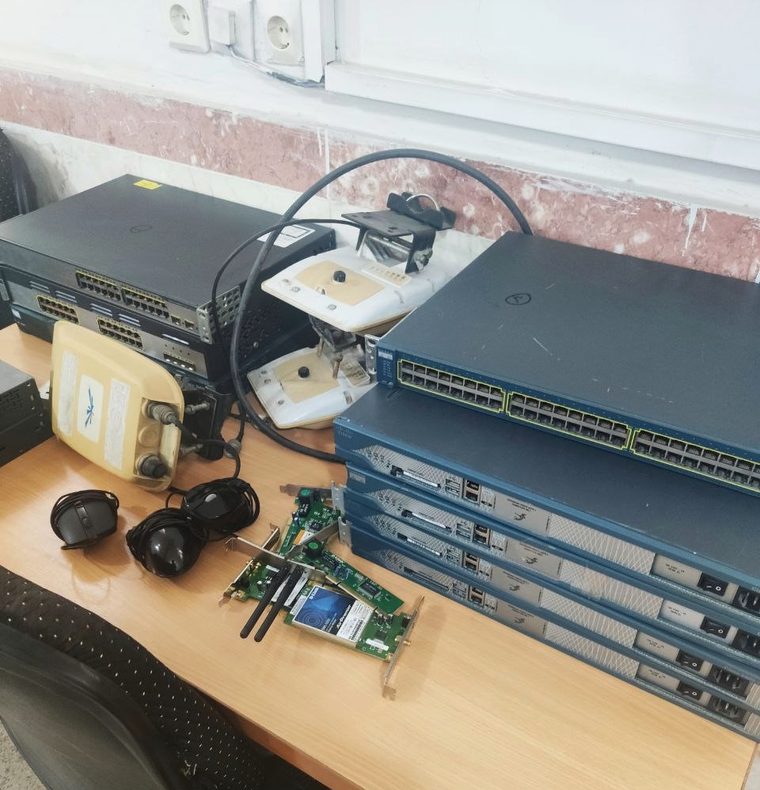
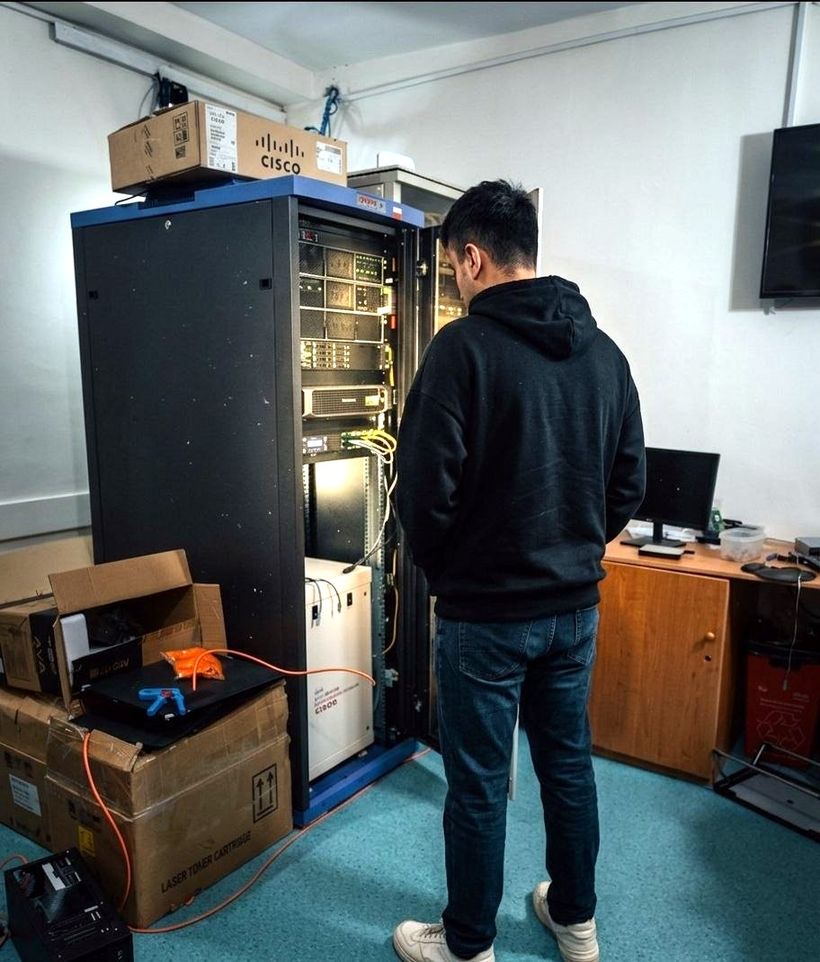
Close to 80 independent projects through ParsCoders and direct referrals, all on-site, I travel to the location myself. This is where design assumptions meet the reality of racks, cable and hardware.

  • Deploying and troubleshooting small and mid-size networks
  • Switch, router and access point configuration
  • CCTV system installation and configuration
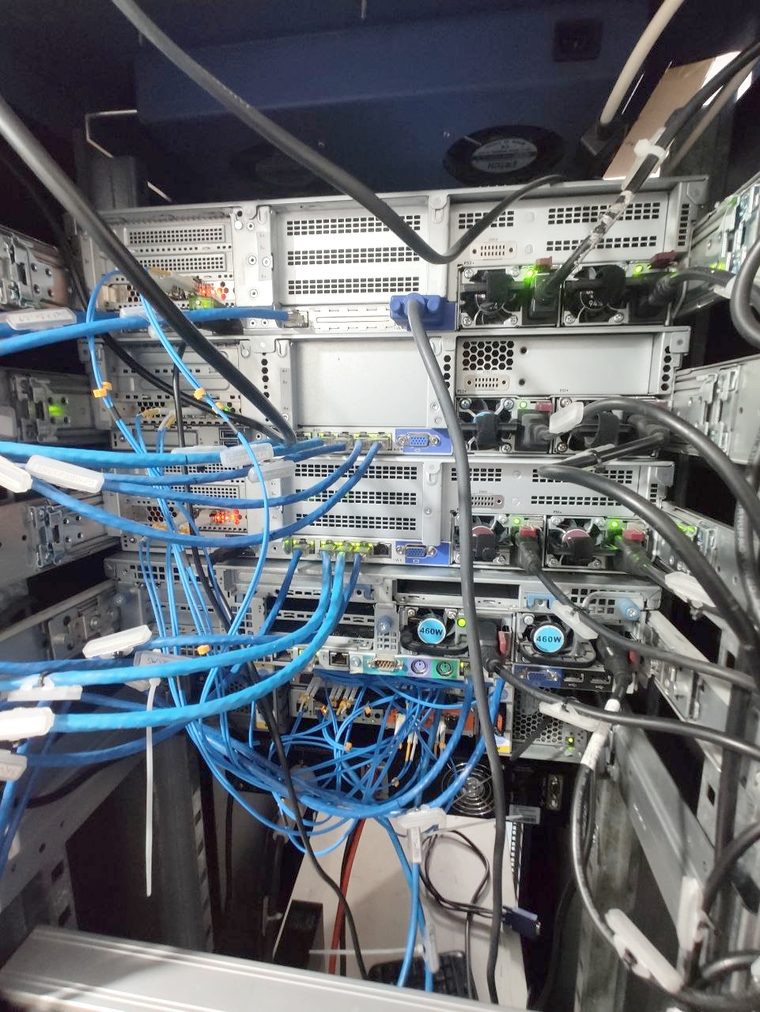
  • Structured cabling and rack organisation

Behind the work

On paper, network expertise looks like a list of certificates. In practice it is hours spent at the rack. This section shows both.

I started in network support and deployment. Today, alongside on-site project work through ParsCoders, I have worked with Khuzestan Science and Technology Park and Sarzamin Abri, and I am an undergraduate in IT Technology Engineering at Islamic Azad University, Ahvaz.

What redirected my path was noticing how much of day-to-day network work is repetitive and automatable. That led me to Python, and then to language models, not as a side interest but as a tool for the job I was already doing.

Location
Ahvaz, Khuzestan, Iran
Working since
2020
Studying
IT Technology Engineering
Languages
Persian, English (intermediate)

Skills

Three separate groups instead of one flat list. Each one says plainly where I have practical depth and where I am still building it.

Networking & infrastructure

Core specialism · professional and field experience

  • Routing and switching on Cisco IOS
  • VLAN, trunking and inter-VLAN design
  • MikroTik RouterOS
  • Windows Server and core enterprise services
  • SNMP monitoring and CDP topology discovery
  • Structured cabling, racks and surveillance hardware
  • Troubleshooting enterprise networks in the field

Programming & automation

Applied · built and run in personal projects

  • Python: scripting, data processing, dataset construction
  • TypeScript with Next.js and React
  • FastAPI and REST API design
  • Databases with Prisma, SQLAlchemy and SQLite
  • Real-time communication over WebSocket and socket.io
  • Network device automation over SSH and Telnet
  • Development with AI tooling and coding agents

Language models

Growing · so far within lab projects

  • 4-bit QLoRA fine-tuning with Unsloth
  • Building and cleaning training datasets at tens-of-thousands scale
  • Quantisation and local serving with llama.cpp and GGUF
  • System prompt design and output validation layers
  • Grounding model responses in live device data

Experience

  1. March 2020 – present

    Network engineer (on-site)

    ParsCoders

    • Close to 80 independent networking projects, all on-site
    • From deploying computer networks to installing and configuring CCTV systems
  2. Feb 2026 – March 2026

    IT specialist

    Khuzestan Science and Technology Park

    • IT support across a full office building
  3. Dec 2025 – March 2026

    Network engineer

    Sarzamin Abri

    • Installation, maintenance and uptime of network infrastructure

Education & credentials

Certifications I hold and courses I have completed, kept separate from each other.

Certifications

  • CCNACertified
  • CompTIA Network+Certified
  • CompTIA A+Certified

Education

  • BSc, IT Technology Engineering
    Islamic Azad University, Ahvaz
    Sept 2023 – present

Courses

  • Cisco Professional Network Specialist (Routing & Switching)May – Nov 2025
  • Cisco CCNASept – Dec 2024
  • MikroTik-based network engineeringSept – Dec 2024
  • Windows Server 2012 installation and configurationSept – Dec 2024
  • Python for artificial intelligenceJune – Nov 2025
  • Python programmingSept – Dec 2024
  • Security fundamentalsOct 2025 – March 2026

Full résumé

Experience, skills, education and credentials on a single A4 page, ready to print.

Download PDF

Contact

For a network project, automation work or a role, any of these reach me directly.